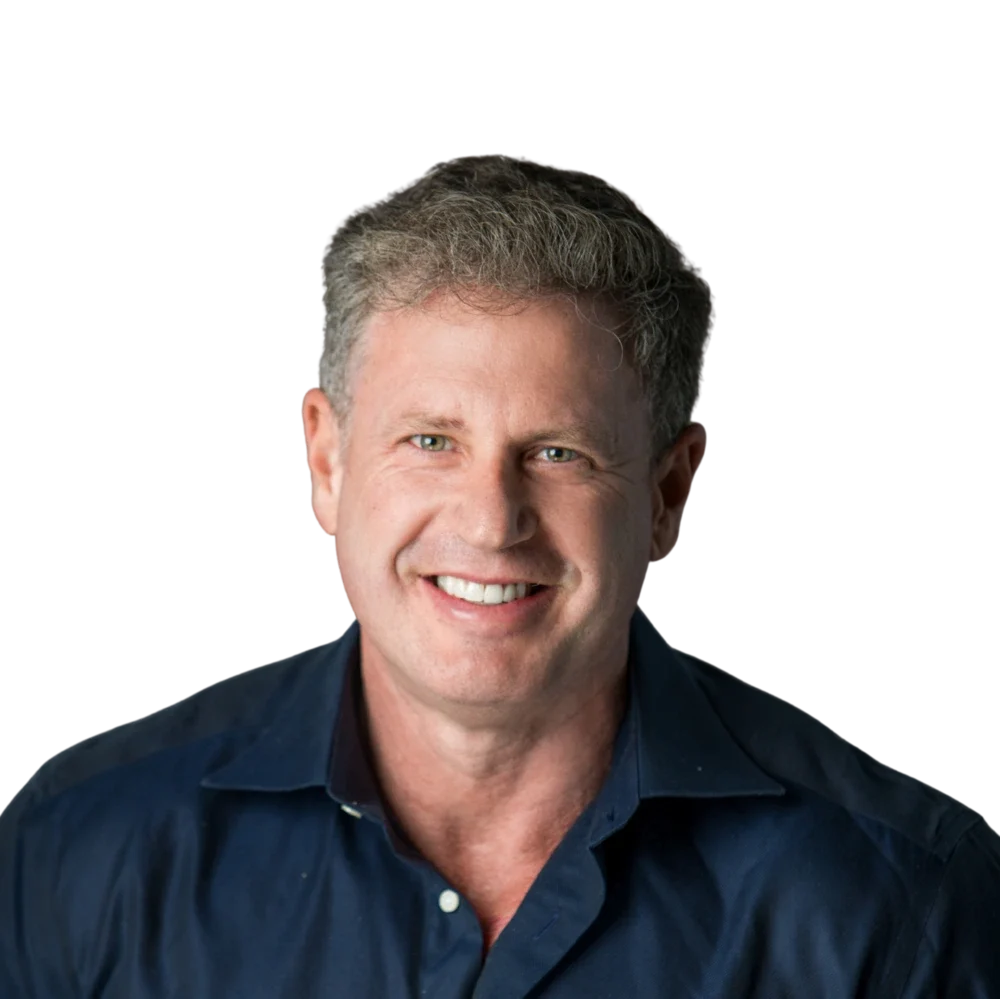
Intro - 00:00:08: Startups Podcast by Excedr. Join us as we speak with first-time founders, serial entrepreneurs, and experienced investors about the challenges and triumphs of running a biotech startup from pre-seed to IPO with your host, Jon Chee. Welcome back to the Biotech Startups Podcast. Today we bring you the fourth and final part of our conversation with Scott Chetham, co-founder and CEO of Faro Health. In part three, Scott gave us an inside look at the economics and operational bottlenecks of clinical trial development, illustrating why manual study design cannot keep pace with modern biological innovation. In this final part, Scott details his leap from Verily and Google to launching Faro Health. From sketching napkin-stage problem architectures in Costa Rica to partnering with Polaris and navigating the twin disruptions of COVID-19 and the LLM revolution, he reflects on building an enterprise software company where customer trust is paramount. The realities of being an experienced second-time founder balance family life and the hardest lessons on partnership and instinct. Let's dive into part four of our conversation with Scott Chetham.
Jon Chee - 00:01:38: I realize we've talked a lot about like clinical trials themselves. Like let's kind of bring it to Faro. Like you decided to leave Google and do a startup. First off, like what was Google very much? Not a startup. Talk about that experience for yourself. You're like, this is a problem that I want to tackle in a startup way. And what were the early days like?
Scott Chetham - 00:01:59: Yeah, I mean Google's Google, it's fun Google and anything health and regulated is just wild because you're trying to tame a big beast. And through Verily it was fun. I mean we worked with a lot of big pharma companies, but they were solving many what I call the me-too problems. And the problem is more what I described in my... it's the planning, it's the development, it's the brutal work. And no one was solving that. And that reflected like my 20 years of career up to that point. It's like, okay, I've spent 20 years doing this. It's hard and this needs to be fixed because it's not getting any better. I got to the point where I was like, well if I don't do this, who's going to do it? Because it has to be done, so I guess I'll do it.
So I told him like, I want to go and solve this problem over here. Let's work out how I can leave. I'll help you hire. And so I got out. I went to Costa Rica and spent like six months, nearly a year down there surfing and planning out the company, what the pathway would look like. And in that time I had a number of VCs reach out and like I said, it was one of them. And Polaris like pre-napkin stage venture round. Yeah, literally, yeah. Put together the pitch deck and it was like, here's the problem. And they got it very quickly. Like the problem's big, it has to be solved. And then I'm a non-technical founder so we had to find someone and build like the first prototype, find the first customer and we got validation on the problem pretty quickly. The problem's very big and it was biting off a chunk that you could solve and get like paid for to prove the market traction.
And that took a little bit longer than we liked because then COVID hit and so we couldn't get out on the road. The problem for pharma was all the basic economics broke because all this money poured into the system and it became a race and we'll throw as much money as anything we can to go as fast as possible with people. And so it pushed automation aside for a while so we had to call a couple of customers and we iterated on it and we had to learn like enshrined business processes and get going. And then COVID kind of came to an end and more of the rational economics of pharma and drug development came back. And then all of a sudden like it was like, how do we become more efficient at the same time? We had the AI now revolution and so like Faro's been through two massive events now. We bounded just around COVID and just after hit and had to deal with that. And then LLMs hit and then it was a change like, well, how do we use this technology? And that's been a massive accelerant for us because we could just do things that are just not possible, as I kind of said. And so that's kind of like the journey of that.
I just didn't want to do another big company. I spent enough time in big companies so I wanted to try this and I was in a... luckily enough I was in a position to do it. I think it's a different experience being an older founder because I think you've got to juggle like family. And I knew I was working till midnight last night on a presentation for a conference in two weeks, like, so you still, you have to juggle a lot more things. But the flip side of that is I think you have a lot more perspective and you have a lot more credibility with customers, particularly in a space that's very much like a vertical where trust is everything. But you also just have to manage the fact that I have other things. I can't lock myself in a room and spend four days coding. I actually don't think that's healthy anyway for many other reasons. But it's been fun and wild. It's still ongoing.
The best quote I remember, because I feel like it right now is things are going well when you feel like your hair's on fire. And I think that sums us up quite well right now. I like it. Duck. We look great from outside, but everyone's legs are moving a thousand miles an hour right now to get everything done and to deliver to our customers. And that's ultimately who we are. We serve pharma and we want to keep serving pharma. And how do you do well on pharma is by serving them well, you win the right to sell them the next thing. It's purely a referral business. So we're not in advertising. You can't really throw money at it like it's a purely referral business. So that's what we focus on. And that is partly the business model as we're a referral sales business. And I think, you know, we grow by owning the right to sell them more solutions to solving more of their problems. So if someone's doing it by hand, we would like to take that on to either one, replace it or two, like augment the humans in there so they're spending times on more high value things. That's our focus right now is post-Series B. It's scaling. How do you take the elements that are working well, but go from doing a few things a year to now many, many more things and survive that kind of expansion phase?
Jon Chee - 00:06:15: What you said, like, really resonates with me about, like, everything looks like a duck. You're just feet just like going. And I feel the exact same way. And I'll speak for me, I feel like I've never had this much fun in company building. We started Excedr like 15 years ago and like first couple years were like zero to one. And I kind of remember that feeling, but it was exhilarating. There's a lot of kind of like existential kind of like, oh, crap, like, right? And then we went into scaling it 1 to N for a long time, but now I feel like I'm reliving the 0 to 1, but with all the kind of like bruises and scar tissue and like learnings that I've had and like, I don't feel like I'm going to be destitute because we kind of like built the foundation of the company. We're going to be just fine.
And I had a lot of existential dread in the early zero to one phase. There's like not going to be able to put food on the table. But now it's just like awesome. I can relive this zero to one building. Just really just try to experiment more and more. But you're right, still working a ton. My hair does definitely feel like it's on fire, but I'm having a lot of fun. Are you experiencing the same thing or are you like oh my God.
Scott Chetham - 00:07:22: Depends on the day. I think it's yes. I think this is a much more energizing time because I think you can just do more and more and you can see the impact more. Like you, I don't have existential threats financially, we're stable now. So I think less dependent on VCs. Not even Series B like, and if we chose to be self-sustaining profitable, we are. It's just how much you want to grow now. It's a different time.
But I do think I am acutely customer focused and I take all feedback very, very personally which is good and bad when it's product wise. And so I think it's meeting our customers' expectations because they have huge pressure on them right now to change. I'm feeling it referred doesn't mean I should but I just have a lot of empathy because I did the job and I know how stressful and hard it is and so I feel empathy for them because they have no choice. But pharma has to transform right now and it's not next year, it's now or we will grind to... As I said, the cost increases and the time increases and the stuff backing up onto the shelf is crippling, is going to cripple this industry.
And so we kind of, I just feel acute pain and we want to help them transform through that and I think that just means like moving at an uncomfortable speed whereas just you know, you don't feel like you can get your foot on because as soon as you solve one person's problems, the next problem in their workflow pops up. It's like oh well we unblocked this. Now there's this problem like we made that go faster but now we're stuck here. And so it's a perpetual thing right now. It's not necessarily good or bad but I do think that it's more of the fun part. I think it's also just because you said it, you know, I have a lot more leverage now. And I think that's what's very different is, but it's now the stakes in choosing where to apply the leverage is so much bigger. I think that's the difference is like the stakes are bigger. But I also, you know, people tell you like you could see me on the happiest day of my life and the saddest day and you won't see a reaction.
Jon Chee - 00:09:20: Yeah, the stoic.
Scott Chetham - 00:09:23: It's funny, like I get comments about it all the time. I won't talk about kids, but who would think that's genetic?
Jon Chee - 00:09:29: Yeah.
Scott Chetham - 00:09:30: My youngest son, Lachlan, you can put him on a roller coaster. He'll be having the time of his life. He would know. He'd be sitting there blank-faced, like not move.
Jon Chee - 00:09:38: That's so funny.
Scott Chetham - 00:09:39: And so it's like, wow, that's a genetic trait.
Jon Chee - 00:09:42: Yeah, that's so funny. I love that. And so like I totally empathize too. Like I feel for the customer and like exact same kind of thing where I was the customer at one point in time and I feel it viscerally. And you mentioned that Faro had to like the V1 Faro product. You had to change things and like evolve it for kind of these waves of technology changes. Talk us through how you are relieving this pain for your large pharma clients. Like what was the original product and where are you now?
Scott Chetham - 00:10:14: Yeah, I mean the original product was at the time pretty cutting edge, but if you look back, it's like a fancy calculator. What it would tell you is to be able to work out how much patient burden, how much time costs money for science side staff and blood volumes, other things. Am I taking from a patient? How much is this thing going to cost me? It would let you do that in instances and play with scenarios around that. That was the first product and it was SaaS-based forms. It was a little bit hard to use just because you had to get all that information in to get the value of it. And everyone's busy and no one necessarily wants to do that. So you know, we had pseudo services as well that you know, helped, but it was a traditional SaaS product. But we built that knowing that without that linchpin, it creates a digital representation of the most complex aspects of a clinical trial design enshrined in a like a model that had never existed before anywhere.
So we had this huge domain model and ontology of everything you could ever measure in a person, how it relates, how it fits together. How does this data get recorded and transformed? So we had to build this thing or you couldn't build the rest of it. And we had to build it in a way that we could get paid for it and then to keep expanding it. That was the first product, but it was in some ways a wedge to get in the door. Sold at a loss and then from there the journey is on. Has always been like, how do you automate stuff? It's like downstream.
Fast forward to today. I mean you may have drafted your protocol in Word. You might like these complex tables that sit inside clinical trial protocols. And what we can do is like absorb it. I wouldn't say standardized is the wrong term. What we do is we can consume it, we can map it to our knowledge graphs and things and augment the data in it to show you like other bits and pieces. Then what we can do is give you a full clinical regulatory, clinical operations review and others that take months of work and do it in about 45 minutes and show you all the things that could go wrong and all your opportunities to improve the design. And then we do automate things downstream. You have to build all these web capture forms for every trial. For patient data there's a big EDC called Electronic Data Capture Systems. Very expensive. Programming them takes three to six weeks. We can do that push of a button and there's a lot of other stuff, but you know, there's a lot of automation.
I kind of hinted what we're presenting next week is our research assistant where all the pre-work in consuming all this information, reading all the papers, reading all the precedents, searching all prior to studies, the results is an automated thing. And so it's a constantly kind of evolving platform. At this point there's still some legacy stuff, but it gets folded out over time. But the thing about this field, because it's regulated, you can't go LLM to LLM, you know, step to feed an LLM. To feed an LLM. To feed an LLM. You get too much drift.
Jon Chee - 00:12:54: It turtles all the way down.
Scott Chetham - 00:12:56: Yeah. So we have to have systems that map and transform data. But that requires like clinical expertise and judgment. And that's where we have lots of knowledge graphs and other things. You can't rely on the knowledge of an LLM to do this because they don't really have it, but they have reasonable judgment when you give them the right context and the constraints and say we use that to do data transformation that wasn't possible before. And so this is how you can start to automate step to step. But we have to go step to step to step. So we have to kind of go step, lock it down, do another step, lock it down.
And so that's kind of the journey we're on is like going upstream to help design better scenario planning and downstream at the same time to like eventually get all the way to like what we call the clinical study report from the design. But that's the thing that goes to like the FDA. So I've collected all my data, I've automated the analysis, here's the report, I'm submitting it. Eventually you go end to end, but this is a five-year journey.
Jon Chee - 00:13:50: That's so cool though, like honestly that's like so rad. I think about being at the bench. I, you know, I had no expertise and like obviously by my questions you could probably tell I'm not familiar with clinical trials. I was just like a pre-clinical person. But even just like hearing the ability to digitize this and like start to actually make use of this data that is like latent is freaking awesome because like I know like plenty of labs that like the lab notebook is still the lab notebook, like a physical notebook. And I'm like, oh, there's so much room for improvement here.
Scott Chetham - 00:14:23: Yeah, there's a lot of equivalents to Faro probably further along in the pre-clinical space like lab automate it for like pharma now. I mean the ultimate journey is for us to tie into one of them and consume all their information because that would make it automate a lot of the safety planning and other things. So it means I don't think this problem will exactly be solved by one company. It can't. But I think if we can partner together really well, I think a lot of people can be very successful here through partnership and data exchange and nobody has to own the whole thing.
Jon Chee - 00:14:53: I just frankly don't think it's possible.
Scott Chetham - 00:14:54: I agree and I think that's where I just pick on Anthropic. But I have heard like the comments, well we're going to solve all like legal, we're going to solve all of life sciences. And it's like I don't think you quite understand what that statement actually means and involves and how many subsystems. And I also don't think an LLM is the right even model to solve some of it. Also like you just don't have the data, you never will. Like that information is highly proprietary and will never leave those walls of those companies. That's the secret sauce those decisions on strategy and others. Sometimes you can, I gave you some examples, you can pick from the outside, but there's a lot of internal discussion and that data, the decisions and the data behind it will never be in the public domain.
Jon Chee - 00:15:35: Yeah, some of these companies have been doing it for like a hundred years.
Scott Chetham - 00:15:38: Yeah. Well, their chemistry, like Merck, there were chemists and brilliant chemists. Like you've got to take a really complex molecule that's really long, how do you fold it up into a tiny thing that you can put it into a tablet that can be absorbed across the stomach. That's real chemistry. I mean there's a lot of real art there. And that's how they started. And I think as you said, there's a lot of empirical knowledge there. Although I will tell some, say to customers all the time because I go, well, if you digitize all my past decisions, like, you know, it would be brilliant. And we keep telling anyone is anything past 2019 because we've done this work is useless.
Jon Chee - 00:16:12: Oh really?
Scott Chetham - 00:16:12: They've changed so much. Yeah. We can actually even show you in the data like it's interesting footprint. Our data science team can even prove it and show it that things change so much. It's around COVID, but it's not to do with COVID more to do with changes in other bits and pieces in the industry. I would say, as I kind of hinted, there's a lot of next generation technology and those designs are more complicated, like everything. You started to see this appear around 2019 and that accelerates. We just tell people, don't even bother.
Jon Chee - 00:16:40: Not worth it, it's not worth it. You would just like pollute your data sets.
Scott Chetham - 00:16:43: You probably will actually because there's not a lot there that's worth using because things have changed so much. Standard of care has changed so much in the healthcare system because you have to prove your molecule against standard of care. The standard of care globally is so different in the last six years that in the practice of medicine you can't compare it. So it just pollutes your pool. That's the other interesting thing is like, yeah, you can have hundreds of year data, it will tell you now it's not all equivalent. If people come in and say, well I've, we've heard it because we have a competitor that goes, we've digitized a hundred thousand things and like ours is small and it's like, yeah, so did we and it's not worth it. My counter argument is what matters. Here's what matters, here's the data, if you cut it like this, I think it's like, more is better. It's... no, that's not always.
Jon Chee - 00:17:26: Yeah, that's so wild to think. And like, I think the way you described it too, about, like, everyone working together and is like the ecosystem that I think. I can't imagine just having one unified system across all these disparate... they're so different. Like, they're so different.
Scott Chetham - 00:17:42: Use is different. Yeah, yeah.
Jon Chee - 00:17:44: And like, one of the things, too, I always, like, think, like, I empathize with my colleagues at the bench about just like not being able to plan downstream. Basically, we're just like, praying, like, all right, the pre-clinical work, like, looking good, but we just can't plan downstream of what are the ripple effects down when it gets to the animal. So it's clinical, like phase one, phase two, phase three. It's almost like a Hail Mary every time. Like, you just, like, you toss it over the fence and you're like, it's in their hands now.
Scott Chetham - 00:18:12: Yeah, I mean, well, that's the thing. Like, yeah, it gets tossed to translational medicine, and translational medicine has to do exactly that. Translate it. That's why we have a field called that I briefly dabbled in. It wasn't very good at it. I don't like that. I don't like doing animal work. So I think I bowed out of that pretty early. But, yeah, you just, you can't know. I mean, as I said, when it comes down to it, we don't really understand biology. And I think it's going to be many, many, many, many more years and it could be another couple of decades before I think we actually crack this enough to be do real, like, trial simulation.
I just, I'm highly skeptical. I hear a lot of predictions and other things all the time, but I think I've just been doing this too long, that it's very hard to predict from data what the outcome impact real patients would be because life happens and the effect is never as big as you think it is. And because everyone's genomics is a little different, it means the expression, you know, you get a slightly different effect. Unfortunately, we use demographic labels all the time to try and describe, like, oh, this person is black, so, you know, the drug will be different. In reality, it's nothing to do with the social labels. There's just different genetics in everybody. So there's going to be a slightly different, you know, response, a different safety profile, different efficacy, and we just like to put social labels on those things.
But in the end it's really just different genetics. And so because of that you'll get a lot of different results and we don't really understand it because we don't have good models of all of that variance even. And you see it in the clinical data all the time. And I mean I think well that's a whole nother conversation for a different thing. There's a lot that has to happen in that area and I think that's the other thing is we just don't have the data. And so again I don't see like us replacing trials with simulations anytime soon. I think it's a great way to augment now and reduce the number of participants and like accelerate things. Yes, but we're a long way from the sky and why.
Jon Chee - 00:20:14: Yeah, and when you're looking out one year, five years, 10 years, where do you see Faro going and where do you see the industry going one year from now?
Scott Chetham - 00:20:23: I think what we would love to happen is have we've started to get it now. Customers on the podium at conferences saying we've accelerated... choose your favorite thing concept sheet. My idea from the trial to my first patient in we've reduced it by 50%. I want that in a year from now. I think two years from now be like more through the journey. You're not going to see anything where oh we've got the whole journey down. I think it's like we got this part of the journey down, then we've got this part of the journey and then I think in five years you're definitely going to hear okay, we've done from my idea to my submission and that we have objective evidence that this has gone down. That's coming. Whether it be Faro or not, it's coming.
I actually think it's going to be a whole... I'd like to think we're the platform of choice but I think there's going to be other players involved in that. There's going to be self-built systems that power aspects of it as well. These are to going big ecosystems and so that'll be an interesting presentation. 10 years I think it's hard to know because keep in mind like a drug I'm starting today, I could still be studying it in five years and if we don't change I'm going to still be studying the thing I put in first in man today in 10 years, that type of cycle in 10 years.
What I'd like to think is we fail faster. I think you don't spend as much time and money and we identify the early failures quicker and I think that could come about through better strategy and all sorts of things. It's not one thing solved everything. This is a, I would say a new way of working and like using data to make much better decisions by looking at all the options up front. So it's not going to be like one magical thing. I think it's a rethinking of this journey, beginning to end. And that's the exciting part, but that's the hard part of transformation right now. It's bringing is... and I feel, as I said, I just feel for my colleagues the amount of pressure on having to transform and, and rethink companies that have been doing this the same way 30, 40 years and many of the staff have been there 30 years and transforming that. And so it's just an interesting time.
Jon Chee - 00:22:17: A question for you on this transformation. Is it coming from like Wall Street? Is it just in the zeitgeist?
Scott Chetham - 00:22:23: It's a leadership mandate in almost every company we know of, to be honest. I think it's... you see, it's like every company now wants to get up and say we adopted AI and we reduced X, Y and Z. And I think it's just the market expectation now. I just think unfortunately, like the market expectation and the reality is different. I mean, you mentioned Meta and I read an article yesterday saying that originally Mark Zuckerberg wanted to remove a lot more of the company, but the agents just weren't there and so he had to back off and never even had to rehire and do it. I think pharma's not that aggressive. It can't be because we've got safety and human lives involved. So thankfully they didn't go down that pathway. But that pressure to transform, whether it be from the market is there or the expectation, this is why it's inevitable at this point, forcing it to happen. It's just exactly not clear how quickly and how painfully.
And I think that's what's hard because, I mean, it comes down to anything. If you've been doing something you know the same way for 10, 20 years and you're close to retirement, do you want to learn a new thing? And it's interesting because there are those in companies who we see so energized by what's happening, have been there their entire lives and so excited they can finally change. They've been waiting their whole career to do something different, like push. And then you've got the other side, like, I don't want to do anything. I'm going to ride out my year or two years I'm retiring, I'm going to ride it out.
Pharma is an interesting group to work with and then you've got the bio... It's a very different. If you're in biotech it's different. You're a startup, you're moving at speed, you just, you need to survive. It's a different mandate. But these big enterprise customers, it's a just a different experience. And I'd say for the most part we've been lucky that we've got most of our customers, vast majority just a pleasure to work with and are invested in wanting to do it.
Jon Chee - 00:24:05: That's awesome. And I guess the question for you too is you were mentioning that these clinical trials are getting more expensive, the approval rates are dropping percentage annually or whatever it may be. This change that's coming from leadership, is this what is necessary to stymie that the cost creep and the basically we're just getting less drugs onto the market. Is this the change that's needed?
Scott Chetham - 00:24:27: That's exactly it. It's well because in some of this could be purely economics point where if we're not careful it will make no sense to invest in R&D for drugs because the return, you cannot get a return because of the failure rate. And that means every success has to be... you have to charge so much more money to pay back for all the failure. So it just has as I'm saying this isn't inevitable at this point and so it kind of has to happen and is I think it's how fast in the form of it and how do you serve customers well and helping them through what is just frankly a very chaotic time.
And so as I said I just personally feel referred pressure because you want them to be successful and you want them to you know, for my own self, you know, not just selfish reasons. I went into this career because I like what I do. I wanted to change the field of what I want to do and I want to see them be successful in using our technology. So you take like the wins you just really want them to get be successful and sometimes you have your own viewpoint on what that looks like but you're not them. And also because we've seen it more and we're interesting perspective we see they live in one company we see across many and so we see what works but it is their flavor and their transformation. So it's marrying the two and trying to help guide them without like being too heavy handed trying to be the best kind of partner you can be to... to these people. Because in the end that's kind of what we do. You take the technology away and everything else. In the end, we're here to help our customers and try to be successful and I think that's what we try to do and it's just take it acutely personally.
And I think that's the prong con of I think being in a founder seat is that you desperately want them to go. Well, I do for the most part. We have never lost an enterprise customer, thankfully. But you just got to keep trying to help them and get them to transform and guide them through what is just frankly very hard for them. And everyone wants everything yesterday. And I wish I could be everything yesterday.
Jon Chee - 00:26:19: Yeah, yeah, I had the same experience. It reminds me of like MJ and The Last Dance. Just like I took it personally like, like when I hear something like, exactly. He's like, when I hear feedback on like the product or what we're doing, it's like my baby. Like, it's like, oh, like I truly take this personally for the most part.
Scott Chetham - 00:26:38: Don't get me wrong. I mean the feedback is great, but occasionally it's like, oh, well, that could have gone better. And it's like, well, why? We'll say, well, I wish it did this. Why do you want that? Well, if I did this, then I could do that and then this was. And then I wouldn't have to deal with this thing and this thing is that. And I'm like, oh, okay. Because everything touches everything else. That's the problem in our field. It's like you fix... it's kind of implying you fix one thing, you're pushing the problem down. And if you want to reduce by 50%. Okay, so we now got the startup down by 50%. Well, now I have to do the next phase because it's not enough. And so you've got to keep pushing. That's the thing is I keep pushing and pushing. Although I think the nice thing and the big change as we're coming up to time is that here's the fun part. I'll put it this way.
I learned on a good note, when I started this company, I was pushing the idea of automation and pushing hard. And I had to push for years and explain why this was important and, and get the early thought leaders involved and them getting on board. It is completely gone to a pull. We don't push anything anymore. In fact, we get pulled and it's like the pull is getting harder and harder and so it's good from that perspective, because in the beginning, it was a hard push. It's interesting to... in the last 18 months to have gone from pushing for years to being pulled hard. And I think that's... some of this conversation is a reflection of that. And that's the upside. And it's a... it's actually a really good thing that the market matured and everything flipped.
But it's also an uncomfortable flip. If you spent years pushing and you're telling people they need to do this Y and Z and how it all flipped on your head. And now everyone going, well, you've done this. I want that. Now do that. And then it's like, well, then you worry because I'm a founder, if I don't do this fast enough, is someone else going to do it? And then that gives a market entry. So there's a lot of just so, you know, like, isn't the same where I'm coming from. It's this uncomfortable thing of being a founder is like, if I don't solve it, someone else might use this to come in because that's what I did. Someone going to out me, me. So there's this is inherent uncomfortableness of, like, being in this seat where when a customer's like, I have this problem, I like, oh, I want to solve it right now, now, now, now. Because I spent so long pushing so hard to get anyone to do anything. It's a weird position to suddenly be in the complete opposite.
Jon Chee - 00:28:47: Oh, throughout this whole conversation, there are so many moments where I'm like, oh, I feel the same way. You just went over the crest of the mountain, and now the boulder is just going downhill versus the whole time you're just toiling away. Because for us, equipment leasing. So we've been beating this drum for so long, and academic scientists are not used to this concept of leasing equipment because it's like we just get a grant, we buy it, and then call it a day. But now with everything that we got beat up for two years, and capital efficiency is very much a thing now. So now it's like getting pulled out of us and we're just, whoa, whoa, whoa, whoa. Like, we were just like, fighting, like, beating the drum so loud. And now it's just... it's a weird feeling for sure. And like, exactly. It's this prioritization. Like, we only have so many waking hours in the day, like, that we need to spend our time wisely.
Scott Chetham - 00:29:36: Yeah, no, that's exactly. I like that analogy because that's kind of where we are, is like, we spend years pushing the boulder up the hill and we've gone over the other side now and it's accelerating. And we think it's just a very different motion. And it's like, it's new for me. And so I think it's adapting to this. Very different dynamics now. And a different... because even the way you operate the company is different because I said the leverage has changed. I'm not fighting anymore. Like, and so the leverage is now the opposite direction. And so it's like, how do you steer? So you kind of go from lifting to steering. So there's prioritization. It's just a different set of issues. And so it's a different position. And it's weird when it flips because it wasn't subtle. It really wasn't subtle. If anything, it's accelerating. And so as, again, it's just a very different motion.
And I think, you know, we're tiny. And then you think about Anthropic and OpenAI and how they must be. You know, I mean, this is... I'm impressed by, like, put all personalities aside. They've done a really good job of scaling, like, compared to other companies. I don't like, Google's a good example of this. Like a Meta. Like, they scaled in a really brilliant way, but they did it in a fraction of the time of anyone else. And they've managed to keep coherence in, like, what they do. And it's really impressive to look at those companies, like, just from a business perspective.
Jon Chee - 00:30:53: Yeah, it's incredible. Like, proper incredible. Because, like, I feel like you would just, like, get crushed under your success. Like, absolutely decimated.
Scott Chetham - 00:31:01: Yeah, but they haven't. And I think that's what I mean. And maybe that's just a founding viewpoint, like, looking at... Wow. Like, good job.
Jon Chee - 00:31:08: Yeah, exactly. Yeah.
Scott Chetham - 00:31:10: That's like, impressive as hell. Like, I don't know how you did that. Yeah, we're tiny and it's painful. I guess it comes down to, like, then you've got more management structures and other bits and pieces. But I think they've strategically, they've done brilliantly.
Jon Chee - 00:31:24: Yeah, absolutely. Yeah. I was like, thinking about that too. Just like. Yeah, exactly. We said, despite the personalities, this is like, it's a commendable feat that they've achieved.
Scott Chetham - 00:31:33: I mean, sometimes I think this is one of the things you kind of have to separate. I hope people do that with me. It's like you have to separate the founder from the company because they're not the same thing. And the bigger they get, I can clearly, like, I'm learning they're not the same thing in the beginning. Yeah, it is, because it's you. But I think you got to get comfortable with the fact that it's a living, breathing, cultural thing now. And you hope it's, you know, the culture's going in the right direction, just like children. It's a fascinating journey and I think, you know, kudos to them for doing it and what they've done, like, an amazing achievement just at the speed it's been done at. But also, like, I always think, God, you guys must be tired.
Jon Chee - 00:32:08: Yeah, we were talking to some friends who are at Anthropic. They literally were just like, I'm so tired. Like, just like at dinner. Just like, we are so tired.
Scott Chetham - 00:32:19: Well, that's the thing. None of it is sustainable. When I look back to the founding comments, like, well, we work seven days a week. We do X, Y and Z. And it's like, you can only do that for a couple years. And that's one of the things, like, I know because I worked in healthcare and I worked shift work and I worked long, stupid, long hours. And you can do it while you're that age and you can do it for a little while, but when you're like 25, you can only do it for so long, you will burn out. And I saw it again and again, like, physician burnout's huge because that's who regularly pulls that sort of hours. And so I think it's like one of these things. At some point we're going to have to get into a more sustainable pace, these things. I mean, that's not now. I mean, I feel like I'm also, by the way, completely hypocritical. I'm being a complete hypocrite in this comment bluntly about myself and other people in the company. But at some point, we're all going to have to. And this is pharma. And I'm saying the same thing. At some point we're going to get through this transformation.
But I think it's a global... So you said, like, where is the pressure coming from? I think this is just society and transformation in general. We've been through a couple of big, massive events and we're going through one of the big ones again. I sincerely hope there's not a third one behind it.
Jon Chee - 00:33:23: Yeah, I don't know if I got it in me.
Scott Chetham - 00:33:26: Yeah, I don't know if the world does. So I think this is a big one. It's got more time to play out. I think it feels like. But I do think at some point we're going to get much more into a sustainable cadence. If you look at history, I mean these chaotic periods happen, but they usually, they are time limiting. I hope this one, as I said, AI has got more to play out, but I also think we'll get more comfortable with it.
Jon Chee - 00:33:47: Yeah, I was like talking to someone and like, I think there's a lot of runway left on this thing because I think there's like a crazy stat and there's like 10 million Codex users and I'm like, oh, there's way more than 10 million people who can use Codex to do things and work. And I was like, okay, there's a lot of runway here. Like there's still a lot of people who need to like adopt this thing.
Scott Chetham - 00:34:06: There is. But I also think there's going to be a lot of consolidation very soon. I think that we're still in an expansion phase. If we look at history, I think we're going to hit a consolidation phase and I think it's coming soonish. It just kind of has to. I agree with you. Like we're still expanding. A lot of that is capital limiting. And I also think we're coming, you know, look at global, and this is way off topic, but look at global debt and other things. We're getting to the point there is only so much from a capital perspective. It's self-limiting because there's not oodles of runway capital left that could be deployed into this. It's not to say the world's short of money. It's not. But I think we're getting short of what could be deployed actively into this and I think we'll get a real hint on the appetite for Anthropic when they go out. Yeah. But it also depends. I know nothing about it other than I haven't seen how much is going to be listed. How much of that company are they actually putting on the market in an exact way. And I don't know any of the details or if it's even leaked out yet, but I think in some ways this is all these things in some ways are capital limited and I think we're not running a shorter users who could code. We're not short of that. But we're going to run out of fresh capital, being prepared to put into more of this. So I think then there'll be the consolidation phase, then it'll have to drive to profitability and then we'll see the typical cycle that plays out and there's always opportunity in all of that. Finance people make money in any market.
Jon Chee - 00:35:29: Yeah, exactly, exactly. There's either ways to make money.
Scott Chetham - 00:35:33: Finance makes money no matter what.
Jon Chee - 00:35:35: Yeah, exactly. We're over here trying to get a 10% win, 90% loss rate. It's like, oh my God.
Scott Chetham - 00:35:43: Yeah. But the financing people always make money on the IPO biotechs, on the sale, like on the negotiation, on the pricing.
Jon Chee - 00:35:49: Yeah, so funny. Well Scott, you've been so generous with your time. This has been super fun. I've had a blast, honestly. And we always like to close out with two closing questions. First closing question is, would you like to give any shout outs to anyone supported you along the way?
Scott Chetham - 00:36:03: That list would be very, very long. She'll never hear this. When I thank my wife who puts up with a lot, frankly, my co-founder, Ross Jaffe. The list is long, unfortunately, fortunately. But I do thank all the VC like a lot of the VCs and not just because I'm funny. Thank them because money. But I have the unique privilege to kind of work with a lot of people who turned out to be friends. That's been great and very supportive. And not supportive in like yay, do whatever. Like very sometimes like, yeah, that's a dumb idea. You should rethink it. But I think that's like that challenging thing has been really valuable. So I think that list, you know, I think people can look it up is been really, is really good.
Jon Chee - 00:36:43: And by the way, I always got to thank my wife too because she just like deals with my nonsense. It's so, so funny. Just like I feel like with founders is like the company's always on your mind. At least for my wife. Just like there's like, let's not talk about business for like a second.
Scott Chetham - 00:36:58: Yeah, put your phone down. Right then I put your phone down. To us, talk to us, find it down.
Jon Chee - 00:37:04: Exactly, exactly. And last closing question is like, what's the best piece of advice that has been given to you?
Scott Chetham - 00:37:10: I've forgotten who gave it to me. May actually be my PhD supervisor. If things are getting more complex, you're going in the wrong direction. And that thing that has turned out to be true again and again every time I ignore it. And so more than anything I learned like now to really pay attention to that. Like in any technical solution or if even a meeting or anything involving people, if you have to start explaining it more and more, even from a management perspective, if you are getting more complex and structured, it's the wrong direction. I think you gotta fight complexity everywhere.
Jon Chee - 00:37:41: Yeah, love that.
Scott Chetham - 00:37:43: Yeah.
Jon Chee - 00:37:43: I can think about examples of like internally myself. I just like, I'm so stubborn. I'm just like, I want to see this through and I've come to regret it. I'm just like, why did I go down this path?
Scott Chetham - 00:37:54: But it's even like an illegal deal if you end up having to negotiate like an exit sale and you have to have like a... you're talking to lawyers and you're trying to negotiate what happens if this and this and this and this, it's the wrong direction, it's too complicated, it will be too hard to enforce. You'll forget. And so I don't know if it even matters what it is. Like, if it doesn't need to be complicated, it should be just enough to handle. Handle it, nothing more.
Jon Chee - 00:38:18: Yeah. And by the way, you bring that. That's funny that you bring that up because like I literally just lived out on the legal side the amount of red lines going back and forth. I'm like, what are we doing here? But I ignored it. And this was maybe a couple years ago. Ignored it. We ended up signing like I ignored these like signs, biggest mistake, and then just recently went through the same kind of similar legal process. Virtually no red lines. It was like almost like a handshake deal. Best decision I made. Just like absolutely the best. Like when the counterparty on the other side, it was just like exactly what we needed and nothing more. And it was great.
Scott Chetham - 00:38:52: Yeah. No, and I think that's like it doesn't matter what it is. It tends to be roughly true.
Jon Chee - 00:38:57: Scott, thanks again. Hopefully the next time I get to see you in person. Thank you for being so generous with your time. I hope to see you soon. Okay.
Scott Chetham - 00:39:04: All right, thanks a lot.
Jon Chee - 00:39:05: Take care.
Outro - 00:39:07: Thanks for tuning in to this four-part series with Scott Chetham, co-founder and CEO of Faro Health. If you enjoyed this conversation, please subscribe, leave a review on Apple Podcasts or Spotify and share the episode with a friend or colleague in the biotech community. Next time on the Biotech Startups Podcast, we begin an exciting new conversation with another founder pushing the boundaries of life sciences innovation. Until then, thanks for listening. The Biotech Startups Podcast is produced by Excedr. Don't want to miss an episode? Search for the Biotech Startups Podcast wherever you get your podcasts and click subscribe. Excedr provides research labs with equipment leases on founder-friendly terms to support paths to exceptional outcomes. To learn more, visit our website www.excedr.com. On behalf of the team here at Excedr, thanks for listening. The Biotech Startups Podcast provides general insights into the life science sector through the experiences of its guests. The use of information on this podcast or materials linked from the podcast is at the user's own risk. The views expressed by the participants are their own and are not the views of Excedr or sponsors. No reference to any product, service or company in the podcast is an endorsement by Excedr or its guests.